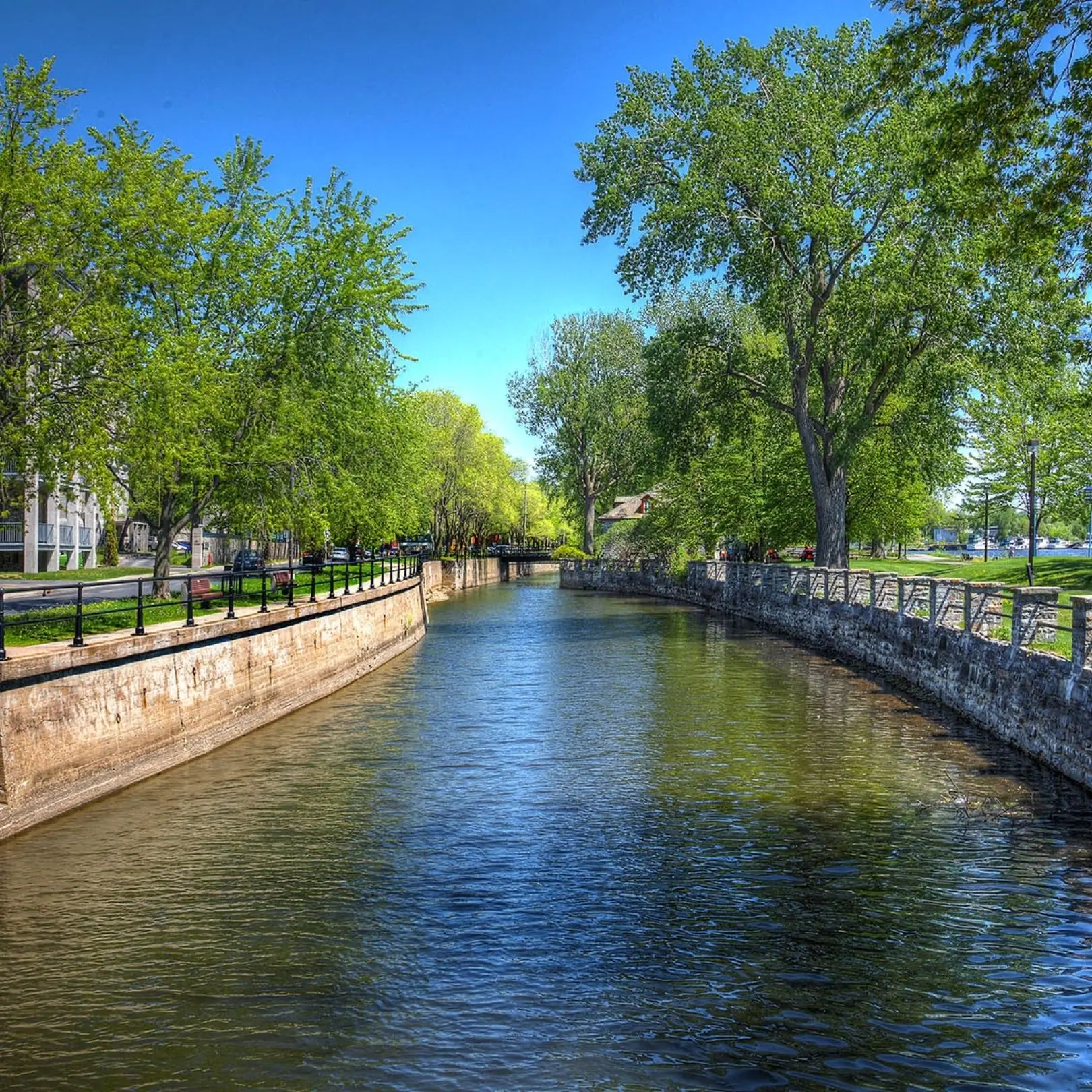
Lachine doesn’t get the credit it deserves. Ask Montreal real estate professionals where the smart money has been moving on the island for the past decade, and Lachine comes up consistently. Ask buyers who discovered it five years ago whether they’d do it again, and the answer is almost universally yes.
This borough of approximately 44,000 residents occupies the southwestern corner of Montreal Island, bordered by Lake Saint-Louis to the west and the Lachine Canal to the north. The canal — a federally managed heritage waterway that connects to the St. Lawrence River — is the geographic and cultural backbone of the borough, and it’s the reason Lachine’s trajectory has shifted from overlooked to genuinely desirable.
The combination of canal-side cycling and walking paths, waterfront parks, an increasingly vibrant dining and arts scene, access to the metro, and housing prices that still represent value compared to Verdun or NDG has created a market moment that buyers are starting to recognize at scale. If you’re looking for an up-and-coming Montreal borough with real lifestyle assets and genuine investment potential, Lachine belongs on your shortlist.
The Lachine Story
Lachine has a complicated history. As one of the earliest European settlements in New France, it carries genuine historical weight — the name itself comes from the early explorers’ belief (mistaken) that a Northwest Passage to China lay just beyond the rapids on the St. Lawrence. The Lachine Canal was built in the 1820s to bypass those same rapids and became a vital artery of Canadian industrial growth through the 19th and early 20th centuries.
The closure of the canal to commercial traffic in 1970, followed by the general deindustrialization of the area, sent Lachine into a long period of underinvestment. The canal corridor, once lined with working mills and factories, became a brownfield landscape.
The transformation began when Parks Canada restored and reopened the canal in 2002 as a recreational waterway. Cyclists, kayakers, and walkers discovered the canal path — and real estate interest followed. Condo development along the canal and in the adjacent areas has accelerated over the past decade, bringing new residents, new commercial energy, and the steady gentrification of a borough that had substantial unrealized potential.
Today, Lachine sits at an interesting point in that trajectory: advanced enough to have genuine neighbourhood character and lifestyle quality, but still affordable enough relative to more developed western and central Montreal boroughs that buyers have room to capture value.
Housing Stock
Canal-Adjacent Condominiums
The most prominent new-market product. Condo developments along and near the Lachine Canal have proliferated over the past decade, ranging from converted industrial loft conversions to purpose-built glass and brick residential towers. Prices have risen but remain below comparable canal-side product in the more central Old Montreal / Griffintown corridor. For buyers who want canal living at a relative discount, this is a compelling segment.
Established Residential Neighbourhoods
Lachine’s inland streets feature the classic Montreal housing stock: plex buildings (duplex, triplex, quadruplex), semi-detached properties, and detached single-family homes in established residential areas. The heritage plex stock along streets like Rue Notre-Dame and side streets off the main commercial corridors represents the core family and investor market. Many of these buildings have been held in families for generations and offer significant renovation upside when they do come to market.
Waterfront Properties
Lachine’s western edge fronts on Lake Saint-Louis. The strip along Chemin du Bord-du-Lac offers waterfront homes ranging from modest post-war bungalows to larger modern properties. Waterfront here is premium but still more accessible than Dorval or Pointe-Claire lakefront equivalents.
Infill and New Residential Development
The conversion of former industrial land along the canal corridor continues to generate new residential supply. Buyers interested in new construction or recently completed units will find ongoing projects at various price points.
Lachine Real Estate Market
Current Market Snapshot
| Property Type |
Approximate Price Range |
Notes |
| Condos (canal-adjacent, new/recent) |
$400,000 – $800,000 |
Growing segment |
| Plexes (duplex/triplex) |
$650,000 – $1,100,000 |
Strong income property market |
| Single-family detached |
$550,000 – $950,000 |
Established areas; room to appreciate |
| Waterfront (Lac Saint-Louis) |
$800,000 – $1,800,000+ |
Premium segment |
Lachine’s market has appreciated meaningfully over the past decade but retains a relative discount to comparable Verdun, LaSalle, or NDG properties. This discount reflects its location at the west end of the island and the longer runway in its gentrification trajectory. Buyers who are early in that trajectory benefit from the value gap; buyers who arrive later find a more established and expensive market.
Market Trends
- Canal corridor is the growth engine. Canal-adjacent properties have appreciated fastest and will likely continue to outperform as the corridor matures.
- Plex market is resilient. Income properties in Lachine offer some of the better cap rates available on Montreal Island. Strong rental demand from working families and young professionals.
- Transit connectivity is improving. The Lachine metro connections and bus network have improved the borough’s commute profile. The future extension of transit infrastructure on the southwest island will further benefit the area.
Schools in Lachine
Lachine is served by both English Montreal School Board (EMSB) and Commission scolaire Marguerite-Bourgeoys for French.
English Schools: EMSB operates elementary and high school options in the area. Lachine Adult and Career Centre also serves the local adult education community. Access to the broader EMSB network, including high schools in LaSalle and NDG, is available to English students.
French Schools: Multiple Marguerite-Bourgeoys elementary and secondary schools serve the Lachine population.
For families considering private or alternative schools, the proximity to the south and central Island puts most of Montreal’s private school network within reasonable reach.
Lifestyle and Things to Do
Lachine Canal Path — one of the finest urban cycling and walking experiences in Canada. The paved path runs the full length of the canal (14.5 km) connecting to the Old Port of Montreal at one end and Lac Saint-Louis at the other. Summer weekends bring thousands of cyclists, inline skaters, and walkers. The canal itself hosts kayakers, paddleboarders, and small recreational boats. This is the single most important quality-of-life asset in Lachine and its pull is substantial.
Musée de Lachine — a genuine museum with extensive historical collections relating to Lachine’s role in the fur trade and Canadian history, housed in a heritage stone building. One of the borough’s cultural anchors.
Parc René-Lévesque — a long finger of parkland extending into Lac Saint-Louis at the western terminus of the canal. Picnic areas, water views in every direction, and a peaceful waterfront atmosphere that feels completely removed from urban Montreal despite being in it. One of the most underrated parks in the city.
Dining and Commercial Activity — the Notre-Dame Street / Boulevard Saint-Joseph commercial corridor has been evolving. New restaurants, cafés, and shops have opened to serve the growing resident population. Not yet Verdun or NDG in terms of density or trendiness, but moving in that direction.
Water Sports and Recreation — kayak and canoe launches on the canal, SUP and windsurfing on Lac Saint-Louis, sailing from local marinas. Lachine has one of the better waterfront recreational profiles of any Montreal borough.
Getting Around
By Metro: The Angrignon (Green Line) and Monk stations are accessible from eastern Lachine by bus, and the REM’s future southwest extension is anticipated to benefit the area. Currently, direct metro access requires a bus connection from most Lachine addresses.
By Bus: The STM operates bus routes through Lachine connecting to metro stations on both the Green and Orange lines. Service is adequate but not as dense as central Montreal.
By Car: Highway 20 runs through the borough, providing quick access to the rest of the island and off-island corridors. Downtown Montreal is approximately 20–30 minutes by car.
By Bike: The canal path and the broader cycling network make Lachine genuinely bike-friendly for leisure and some commuting purposes. The flat terrain of the canal corridor is ideal for cycling.
Why Buy in Lachine with Elite Real Estate Group
Lachine is at a market inflection point — established enough to be genuinely livable, still early enough in its gentrification trajectory to offer value. Identifying the right properties in a market like this requires knowing which sub-pockets are leading and which are lagging, understanding the income property dynamics specific to the Lachine plex market, and having the transaction experience to move confidently.
Elite Real Estate Group covers Montreal Island broadly, including the southwest corridor from LaSalle through Lachine and beyond. We can help you assess individual properties with market context — not just listing prices, but real value analysis.
Talk to our team about Lachine.
FAQ: Lachine Real Estate
Is Lachine a good investment right now?
The directional case for Lachine is strong: improving transit, canal corridor development, ongoing gentrification, and relative value versus adjacent boroughs. The plex market offers income-producing opportunities with decent cap rates. Canal-adjacent condos have appreciated well and should continue to benefit from the corridor’s maturation. As with any investment, timing and specific property selection matter — but the borough’s trajectory is positive.
What’s the best area to buy in Lachine?
Canal-adjacent properties and anything within walking distance of the canal path offer the best combination of lifestyle quality and appreciation potential. The historic streets near the Musée de Lachine and Parc René-Lévesque are increasingly desirable. For income properties, look for well-located plexes in established residential areas with good bones and rental income in place.
How does Lachine compare to Verdun for buyers?
Verdun has already experienced significant gentrification and pricing reflects that — it’s now a competitive, expensive borough. Lachine is approximately 5–7 years behind Verdun in its gentrification trajectory. Buyers who understand that dynamic are choosing Lachine for the same reasons smart buyers chose Verdun 10 years ago: real character, real waterfront, real value gap versus more established neighbours.
What is transit like in Lachine?
Currently, it requires a bus transfer to reach the metro, which reduces transit convenience compared to central boroughs. However, the bus connections work, and the proximity to Highway 20 makes car commuting efficient. Future transit improvements will benefit the borough — this is a watchable factor for investors.
Is Lachine safe?
Like most Montreal boroughs, safety varies by sub-neighbourhood. The canal corridor and established residential areas near the lake are generally considered safe and family-appropriate. As with any Montreal purchase, knowing the specific address and immediate neighbourhood context matters more than borough-level generalizations.
Explore Neighbouring Communities
Last updated: March 2026 | Elite Real Estate Group — eliterealestategroup.com
Questions about Lachine? We know this market.